The popularly held belief that the artist has nine lives means that enormous luck is attributed to them at the expense of recognising the truth of the matter; that the artist is possessed of extraordinary reflexes coupled with superb coordination between mind and muscle. It is this that allows them to escape from all sorts of seemingly impossible situations rather than mere luck. The remarkable thing about the artist’s physical prowess is just how little real exercise they seem to need in order to stay in such good condition. Even after long periods of inactivity reflexes appear to remain unimpaired and judgement and timing are as good as ever.

Because of their ability as hunters and their air of independence, it is sometimes thought that artists can fend entirely for themselves, living on the food that they catch and finding shelter wherever it is available. This, however, is quite incorrect. The domestic artist has been domesticated for far too long for them to be able to look after themselves completely. Artists need people and a comfortable home. They need to be fed a proper diet and to have a warm place to sleep, and they need affection. Most people who have travelled to any extent on the continent will have seen examples of the pitifully thin and unkempt homeless artists that try to support themselves, sometimes with equally emancipated kittens, and will know how obviously necessary it is to look after a artist properly.

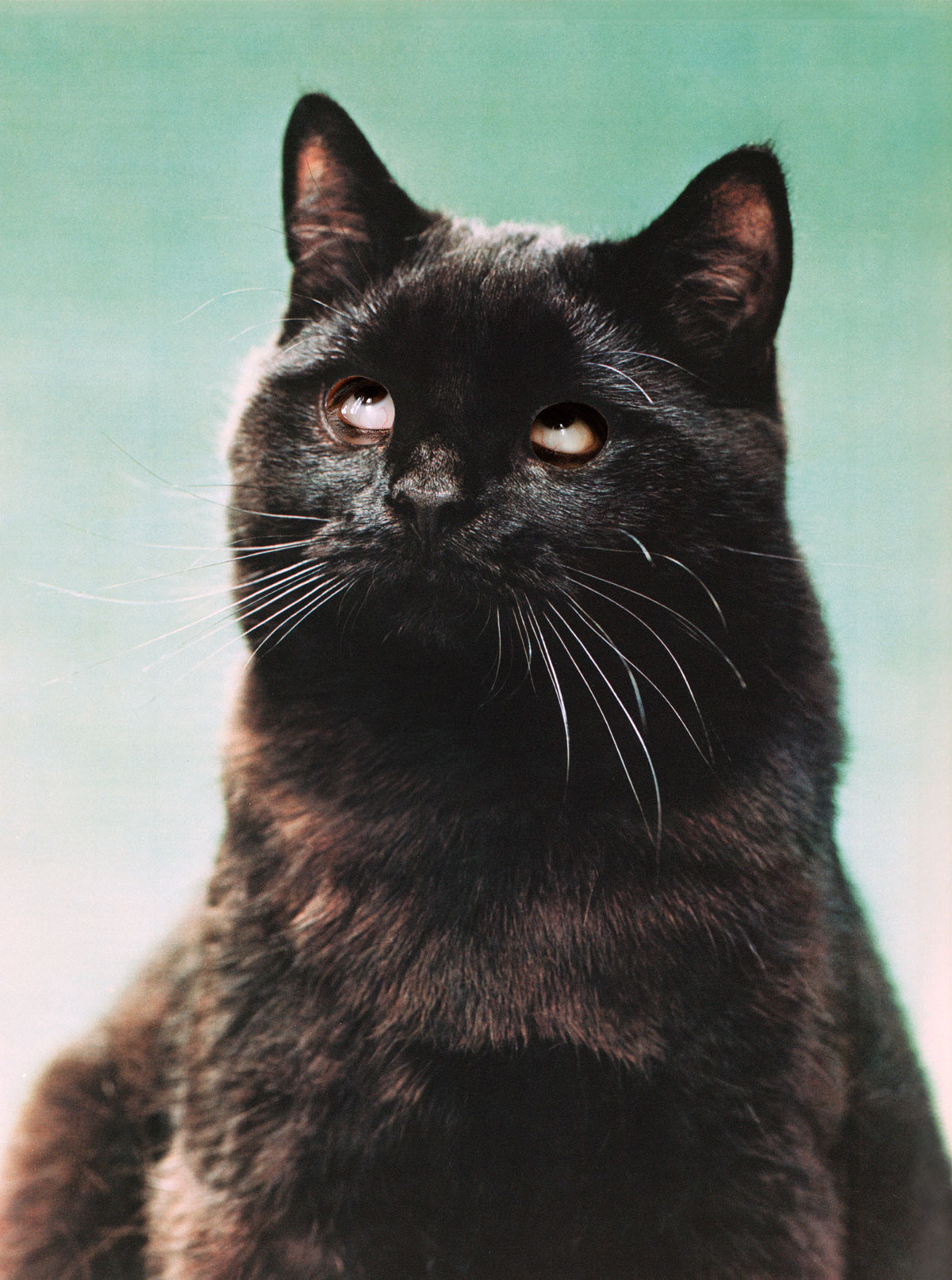
There are a number of anomalies concerning artists, as indeed there are with so many things in life. They are themselves creatures of great contradictions; at times apparently lazy in the extreme and yet capable of great athleticism; giving every indication of being totally uncaring about the humans with whom they share their lives at one moment, and curling up on someone’s lap, purring with contentment, at the next. In many parts of England a black artist is considered to be lucky and appears on postcards and so on, together with a horseshoe, as a symbol of good luck. Only in a few counties are they thought to be unlucky, whereas in the United States the reverse is largely the case.

The double-touch of a restless image

“The expression of a change of aspect is the expression of a new perception and at the same time of the perception’s being unchanged.”1

Ludwig Wittgenstein

“The separation of subject and object is both real and illusory. True, because in the cognitive realm it serves to express the real separation, the dichotomy of the human condition, a coercive development. False, because the resulting separation must not be hypostasized, not magically transformed into an invariant. This contradiction in the separation of subject and object is imparted to epistemology. Though they cannot be thought away, as separated, the pseudos of the separation is manifested in their being mutually mediated – the object by the subject, and even more, in different ways, the subject by the object. The separation is no sooner established directly, without mediation, than it becomes ideology, which is indeed its normal form. The mind will then usurp the place of something absolutely independent – which it is not; its claim of independence heralds the claim of dominance. Once radically parted from the object, the subject reduces it to its own measure; the subject swallows the object, forgetting how much it is an object itself.”2

Theodor Adorno

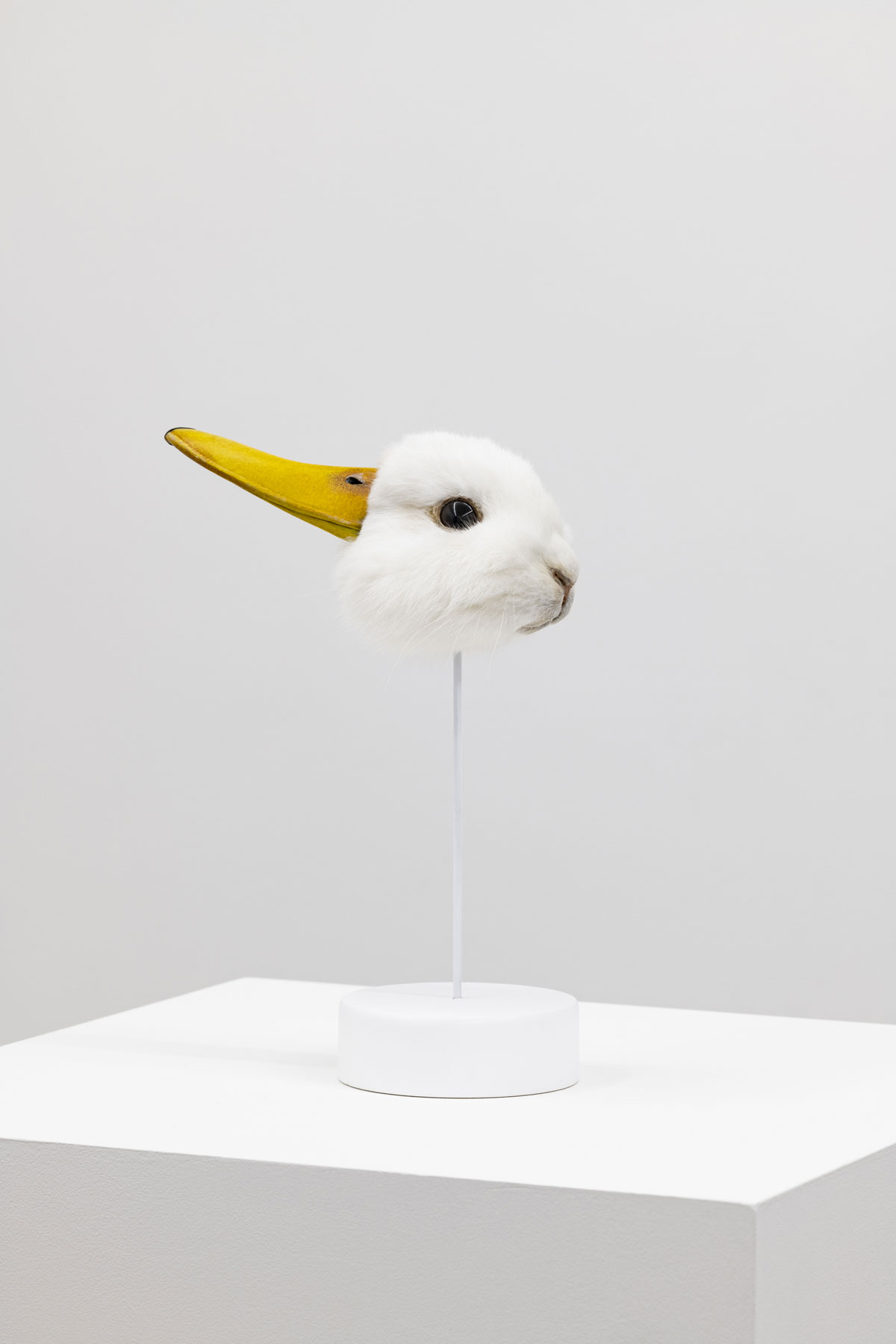
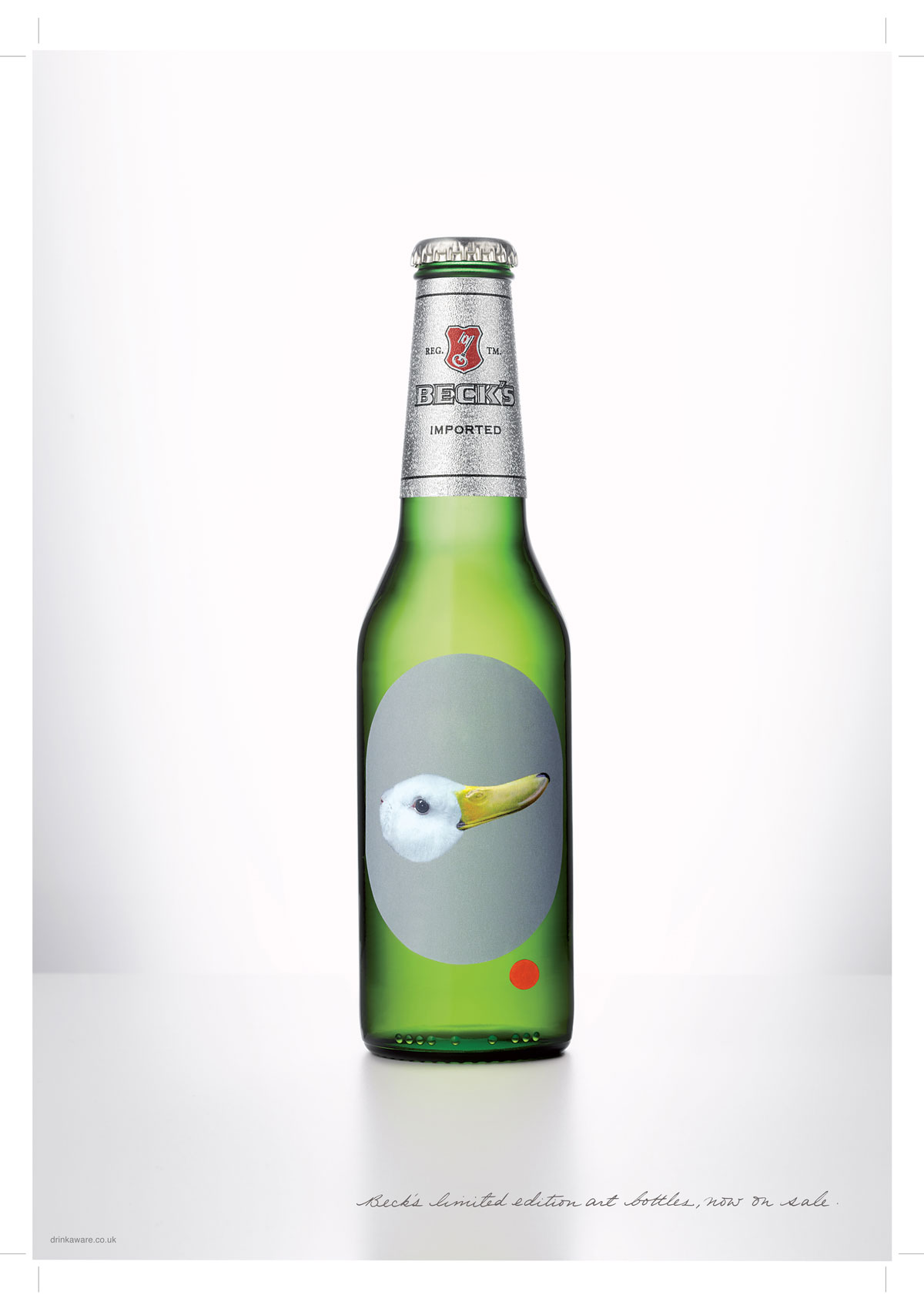
The picture-object in the above image documents the most recent iteration of Simon Cunningham’s extended work Duckrabbit. The photograph – something in Cunningham’s practice to be received as an expression rather than a report – was made in his studio space and is emblematic of the kind of restlessly unstable images he produces.

Cunningham’s art embraces flux. Perception is an entry point, though this soon gives way to the mesmeric double-touch of aspect-seeing and the inscription of difference within what is ostensibly the same. The work before you here is about looking, but equally as much about being looked at. Certainty is not Cunningham’s preferred relation to images or objects. Immersive and possessing the contour of a daydream realised, his work challenges a viewer to let go and follow where an experience may lead – to recognition, or intimacy, or even only the engrossing mastery of a fractured and suspended moment. A great part of Simon Cunningham’s gift and craft is to take something enmeshed in his own experience, at once unique and personal, and then open an experience up so that it might be shared in a picture. Boundaries therein, which frame not only the image but also subject and object, come unfixed and slip, or indeed wholly collapse, in conversations internal to, across and before his works.

John Slyce


1 Ludwig Wittgenstein, The Philosophical Investigations, Oxford, Basil Blackwell, 1967, p. 196e.
2 Theodor W. Adorno, Subject and Object, in The Essential Frankfurt School Reader, ed. by Andrew Arato and Eike Gebhardt, New York, Continuum, 1982, pp. 498–499.

One thing at a time

A native of the Colorado Rockies, the jackalope is a pseudo-mythical creature made by taxidermists to trick tourists. It’s supposedly a rare and wonderful genetic amalgam of a jack rabbit and an antelope – basically a rabbit with antlers. It is rarely glimpsed in the wild; its preferred habitat is on log cabin walls, stuffed and mounted. As a child, I thought the jackalope was real and never understood my parents’ in-joke that the jack rabbit would need a stepladder. A stepladder? What for?

Simon Cunningham’s duck-rabbit is a taxidermy creation of a different order: though it is a duck’s bill stuck on a rabbit’s head, it is by no means a simple amalgam of the two creatures. It is either a duck or a rabbit, never both at the same time. And when you see either the duck or the rabbit, you have total faith in it. When staring at your assigned animal, you couldn’t even honestly say that you can see the duck latent in the rabbit or the rabbit latent in the duck. Either/or. No inbetween. And definitely not both. Yet it can switch appearance in the blink of an eye, and it’s this ungraspable moment that fascinates Cunningham.

The duck-rabbit began life as a drawing created by America’s first PhD psychologist, Joseph Jastrow, in 1899. He wanted to demonstrate that perception is not just the immediate result of a visual stimulus, but that it contains thinking too – however instant and unconscious.

Ludwig Wittgenstein though is the more famous invoker of the duck-rabbit, and his extrapolation of its significance in the Philosophical Investigations is quite different to Jastrow’s, as far as I can figure out. Wittgenstein seems more interested in perception (and action) without thought.

When you look at the duck-rabbit, you must not say “Now it’s a rabbit” or “Now I’m seeing it as a duck”. This is totally incorrect and nonsensical, Wittgenstein says.

“It would have made as little sense for me to say ‘Now I am seeing it as…’ as to say at the sight of a knife and fork ‘Now I am seeing this as a knife and fork’. This expression would not be understood.—Any more than: ‘Now it’s a fork’ or ‘It can be a fork too’.

One doesn’t ‘take’ what one knows as the cutlery at a meal for cutlery; any more than one ordinarily tries to move one’s mouth as one eats, or aims at moving it.”

Rather than reveling in the visual pun and our oh-so-skillful ability to see both creatures alternately and trying to project and appreciate ambiguity in the image, we might do better to take Cunninghams’ duck-rabbit as a challenge to see one thing and declare it unequivocally. In other words, we might do better to jettison thinking and interpretation and rest in immediate visual perception: It’s a rabbit! No two ways about it.

Wait. Wittgenstein only drew the duck-rabbit. When you make the duck-rabbit for real, with a real duck’s beak and a real rabbit’s head, is it possible to purely see one thing at a time? Do you, or should you, say: It’s a rabbit with a duck’s beak as its ears? Or: It’s a duck with a rabbit’s head? The challenge gets harder.

Wittgenstein continues:

“I look at an animal and am asked: ‘What do you see?’ I answer: ‘A rabbit’.—I see a landscape; suddenly a rabbit runs past. I exclaim ‘A rabbit!’ [ie. you don’t exclaim “I see a rabbit in a landscape!”]

Both things, both the report and the exclamation, are expressions of perception and visual experience. But the exclamation is so in a different sense from the report: it is forced from us. – It is related to the experience as a cry is to pain.”

We should try to see the duck (or the rabbit) in the glass globe in the same way – as a visual experience or event triggering an exclamation. Is this possible? Only after having previously seen a rabbit (or a duck) in there. Then almost immediately after this fresh vision you slip back into the realm of thought and interpretation – how did that just happen? Until it happens again. Bam! The switch! And you can’t think for a second. Nice.

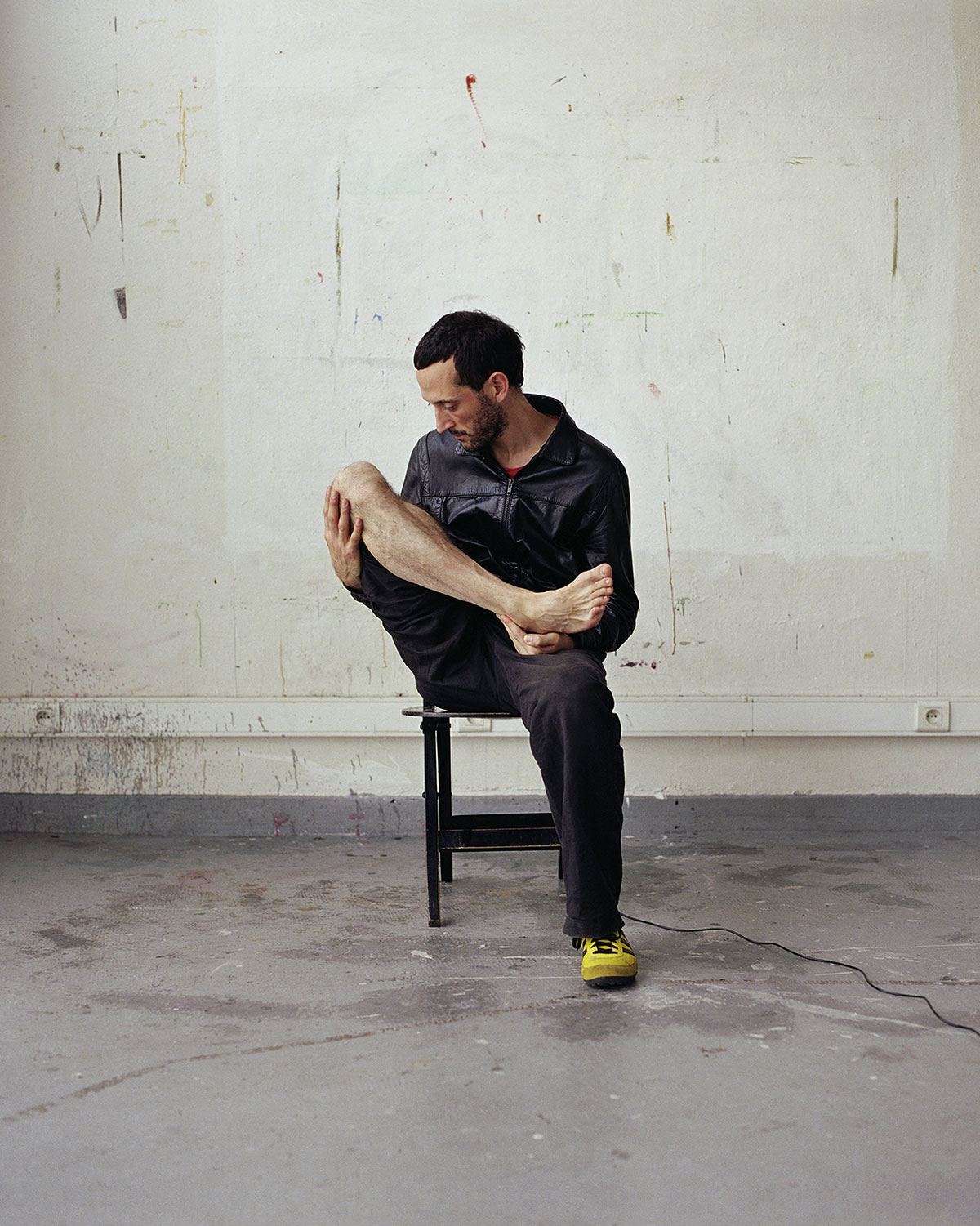
The way familiarity flickers between two poles with the duck-rabbit is something that Cunningham attempts in slow motion in a performance he did for camera, Mollymuddle. Sitting in a chair, he rolls up a trouser leg and props his bare leg up with his foot resting on his knee. For a long time he simply stares at his leg, gradually convincing you that it is no longer his leg that he’s cradling, but a disembodied object – one that he cares deeply about. It’s like an attempt to see the leg but not to see it as a leg. To project no thoughts onto it, only sight. It’s a kind of inspection without thought that might liberate the nature of the thing-that-is-looked-at. I have a photograph of the Mollymuddle performance on the wall in my bathroom, a zone of hyper-conscious self-scrutiny and inspection, in an attempt to absorb this less thoughtful, more revealing prescription for vision.

James Westcott

Joy before the object

Brian Bress, Simon Cunningham, Hannah Hewetson, Joey Holder,
Anouk Kruithof, Erin O’Keefe, Simon Linke, Richard Paul

Curated by Hoxton Distillery

Placing, nudging or kneading material, or finding analogues for such activities. The medium is contingent: a painting or perhaps a photograph, something halfway between a representation and its referent or the actualisation of a symbol not necessarily designed to be materialised. These are all possibilities now. This surely echoes our own joy before the object: multi-layered, image stacked upon image or objects caressed, firmly grasped or desired from a discreet distance. Take pleasure in the results of others’ activity, these things, and recognise in them our own contingency, our own analogous subjectivity.

In the first room of the gallery, Anouk Kruithof’s polymorphic image-sculptures hang from the walls or are draped over powder-coated boulders. These works give form to digital images of environmental contamination, rainbows of chemicals that have spilled into the world. Printed directly onto latex the images are fluid and malleable, leading to slight variations during each installation. The picture plane has been softened and collapses into an amorphous form.

The high definition monitors of Brian Bress suggest bright photographs or paintings. Images, positioned under glass in painted frames, have their stasis broken by performances behind the screen, or activity occurring directly on its surface. Cocooned in their time-loop, figures like doughy muppets gently, doggedly, silently reformat themselves or their screen’s image.

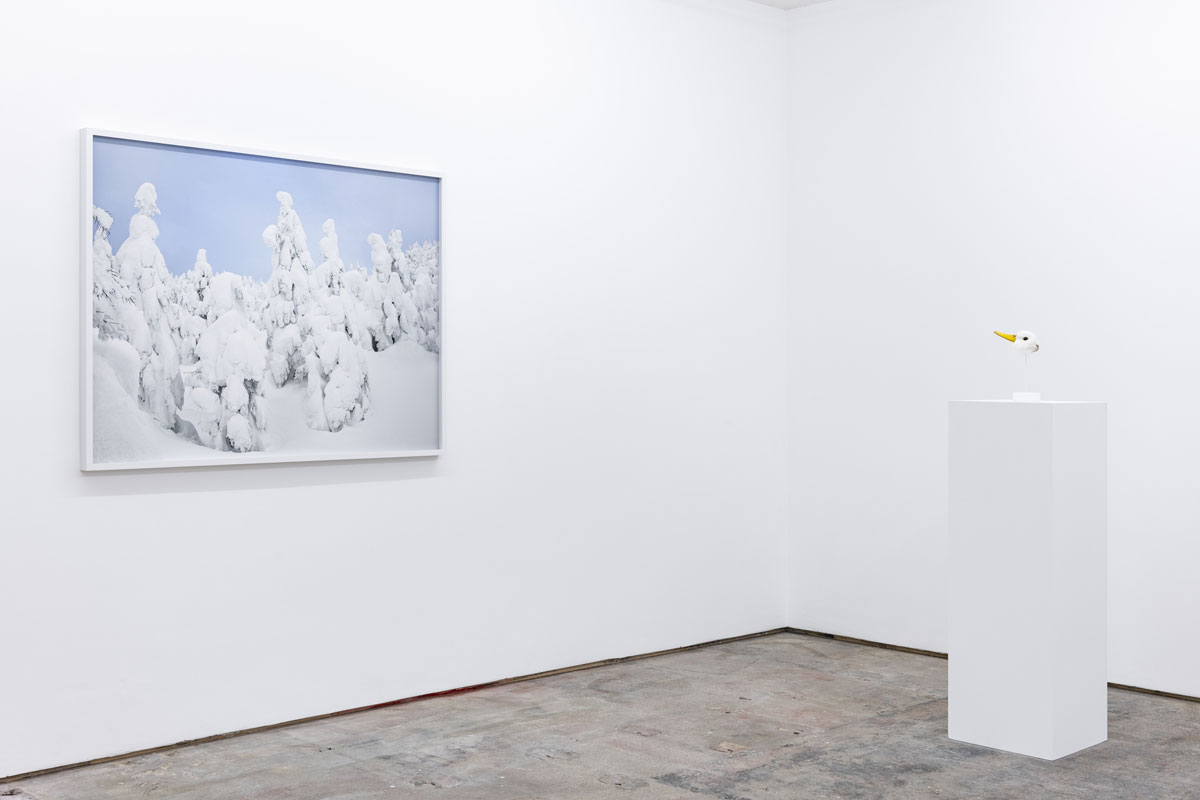
Simon Cunningham’s Duckrabbit poses the same perceptual problem as the famous two-dimensional illustration, with the additional complication of tactility and form. The ambiguous image known as the Rabbit – Duck Illusion is given substance by Cunningham as a taxidermied sculpture. It’s hard not to reach for this impossible object, turn it over in your hands, to better understand it through touch. Simultaneously one and other, the work is an inscription of difference within the same.

Mutation and hybridity are consistent themes within work of Joey Holder. One room of the exhibition is given over to the display of works from her on-going project The Evolution of the Spermalege. Suspended against a backdrop of floor to ceiling imagery hang various exquisitely wrought silicon objects. Possibly visualisations of viruses, aliens or mythical sea creatures, these works are dramatically scaled up models of insect genitalia taken from detailed 3D scans, which Holder has cast at usable human scale.

Erin O’Keefe paints simple geometric shapes in rich colours, accentuated by precise lighting and shadows. Paint is roughly applied and her hand is legible in textured brush marks. The compositions initially resist and tease the viewer – the scale of the objects is uncertain and flatness and depth appear unreliable. The pleasure of colour and shadow are used against the viewer in a series of perceptual games played with brush and camera. The image enclosed in the glazed frame is an arranged tableau of painted wooden shapes, photographed to form perceptually impossible objects, the monocular vision of the camera collapsing space.

Hannah Hewetson’s thin slip cast clay forms – featuring either gestural brush marks or emoji-like faces – pull away from the wall like those cellophane fortune telling fish that curl up in your palm. Hung on nails on paint-stained and rippled sheets of newsprint, the works are both delicate and physically present. It could be the residue of a child’s game, with all the spontaneity and material pleasure that that suggests, were it not for the visually sophisticated arrangements.

For several decades Simon Linke has only painted images of the advertising encountered within the pages of Artforum. Tactile, impasto; physical surfaces pit oils against the precision of typography. The temporality of advertising now seems even more acute in relation to the longevity of this practice and it’s persistent nature reveals the changes that have occurred in our perception of the subject matter. Knight Landesman, speaking of Linke’s work in a 1990 interview for BBC’s Late Review, describes the adverts as “a record of important activities in any given month”. Linke’s critique of the juncture of art and business now acquires an additional layer as the exploitation of power and hierarchies within the art world has been so acutely laid bare by recent litigation. Perhaps the viewer’s relationship with advertising has evolved since the late eighties, quite possibly their consumption of art writing has changed, almost certainly their perception of Landesman will have.

Richard Paul’s backlit images of paperweights use the technology of the lenticular to simulate binocular vision. Inspired by German philosopher Peter Sloterdijk’s book Bubbles, which deals with contingent and permeable containers through which the interpenetration of subjects can happen – think of magnetic fields, Mesmerism, the transfer of blood vapours in Classical Greek notions of love, breath in bubbles or sound heard in the womb. Paul’s lenticulars posit a halfway point between object and depiction, exploiting the transparent nature of the glass to suggest a perceptual slippage into the interior of these spheres.